

The cities you decide you desperately want to see basically dictate the exact timing for your entire Vietnam trip. You really can’t just throw a dart at a calendar. Spanning 15 degrees of latitude, the country is famously shaped like this crazy, elongated “S” that stretches roughly 1,650 kilometers straight down from the north to the deep south. Because of this massive geographic footprint, you are guaranteed to experience completely wild, dramatic variations in rainfall and temperature as you drag your suitcase from province to province.
These regions operate completely independently of one another. We’re talking highly localized microclimates that don’t care at all what the weather is doing just a few hours away. First-time visitors are always shocked when I tell them Hanoi actually gets brutally cold for a few months out of the year. People just assume “Southeast Asia means sweating constantly.” It doesn’t.
Since the dates you eventually book might be absolute perfection for one town but a miserable, damp nightmare – or just a tolerable “second best” option – for another, building a solid Vietnam itinerary demands hardcore flexibility. If you’ve got zero schedule constraints and want to pull off one of those epic, once-in-a-lifetime adventures running from Hanoi all the way down to Ho Chi Minh City (or doing the reverse route north), the absolute best window is between March and April. This specific timeframe delivers the most optimal, reliable weather for a massive cross-country trip.
Because Hanoi gets absolutely hammered by extreme weather fluctuations depending on the season, locals and expats are sort of divided on the absolute premier time to visit the capital. If you get lucky and catch a streak of sun-drenched days, the stretch from September through November is just pure magic. Then December through February arrives and dumps cold temperatures all over Hanoi. You do get very low cumulative rainfall then, at least. Later on, March and April roll in with warmer, much friendlier climates, making those months highly favorable too.
Down in central Vietnam – I’m looking specifically at Hue, Hoi An, and Da Nang – April and March are unquestionably two of the most spectacular months you could ask for. Meanwhile, way down in Ho Chi Minh City, January and February are my personal top favorites.
I’ve broken down all the weather patterns for Vietnam’s three primary travel hubs below: Hanoi, Da Nang, and Ho Chi Minh City. The neighboring destinations that circle those hubs (like Ninh Binh up north) generally mirror the same climatic trends. This compiled meteorological data should give you a robust, totally realistic foundation so you can actually strategize your upcoming vacation without getting rained out.
Vietnam Weather: Best Cities to Visit
| Month | Best City (Cities) to Visit |
|---|---|
| January | Nha Trang, Ho Chi Minh City |
| February | Nha Trang, Ho Chi Minh City |
| March | Ho Chi Minh City, Da Nang, Hanoi |
| April | Nha Trang, Da Nang, Hanoi |
| May | Hue, Hoi An, Da Nang |
| June | Hue, Hoi An, Da Nang |
| July | Hue, Hoi An, Da Nang |
| August | Hue, Hoi An, Da Nang |
| September | Hanoi |
| October | Hanoi |
| November | Hanoi |
| December | Ho Chi Minh City, Hanoi |
Counterpart regions usually share comparable weather with their primary geographic hub (for instance, Phu Quoc aligns closely with Ho Chi Minh City). When I evaluate these places, my absolute supreme priority is finding the lowest total – or lowest probability – of rainfall. Nobody wants to sightsee in a monsoon. My second priority is avoiding oppressive heat. For exhaustive, year-round statistical charts with the real nitty-gritty on Vietnam’s weather, please consult this site or this one.
Hanoi (and the north)
If you want the absolute peak northern Vietnam and Hanoi experience, aim for the general timeframe of October through April. This massive block of time aligns with the dry season, so I rely on it heavily. Seriously, starting your Vietnam trip planning by hunting for low rainfall is the smartest thing you can do. But there are some weird, distinct nuances you need to be aware of up north.

Winter in the north gets violently shaped by the Northeast Monsoon. Because of the country’s specific geography and that crazy S-shape, this meteorological system literally pulls arid, freezing air directly down from China and Siberia. Sometimes it generates these lingering, depressing stretches of grey skies and an unending winter drizzle that gets right into your bones. The French colonialists famously called this persistent misty phenomenon “crachin.”
You also really need to think about the city’s air quality. There are times when Hanoi ranks right up there among the world’s most polluted urban centers. This severe smog usually hits exactly during those colder winter months. You can check a real-time air quality index for Hanoi right here.
If your itinerary gives you some wiggle room, try to specifically target Hanoi in November or October. With lows dipping into the 70s°F (22°C) and highs floating around the low-80s°F (28°C), these two months are noticeably, wonderfully warmer than the bitter winter that follows them. October does carry a slightly higher probability of rain between the two, which makes November the drier bet before the real chill sets in. During a recent trip I took to Hanoi in October, I managed to get an exceptional run of five perfectly sunny days. Unbeatable.
By the time March, February, January, and December show up, northern Vietnam is deeply entrenched in its dry season – but man, the temperatures can just plummet. It gets surprisingly chilly or just straight-up cold! This harsh climatic reality fully applies to any regional excursions out to Sa Pa, Halong Bay, and Ninh Binh too. Taking a winter cruise in Halong Bay takes on this incredibly mysterious, moody atmosphere because the cooler temperatures summon a thick, atmospheric mist… though fair warning, it will absolutely ruin your visibility sometimes.
From December through February in Hanoi, you’re looking at highs in the upper 60s°F (20°C) dropping down to the upper 50s°F (15°C). March finally brings a desperately needed warming trend. You can expect identical temperatures out in Halong Bay and Ninh Binh.
If you are journeying deep into the mountains of Sa Pa during January, February, and December, brace yourself. Daytime temperatures barely rest in the mid-50s°F (14°C) and completely plummet to lows of the mid-40s°F (8°C). When severe cold snaps roll through the region, you will likely witness freezing fog or even frost. Not exactly tropical. As March arrives, Sa Pa finally begins to thaw, giving you lows in the mid-50s°F (14°C) and highs approaching 65°F (18°C). Timing your Sa Pa visit is incredibly critical if your main goal is to marvel at those breathtaking terraced rice fields. The famous golden harvest season happens in September just before the bitter cold arrives. June and late May, on the other hand, deliver the verdant “pouring season.” This is when the mirrored, freshly flooded terraces are newly planted and look like glass.
Northern Vietnam’s rainy season generally kicks off in April and tapers off in October. The wettest and absolutely hottest months of the year are undoubtedly August, July, and June. During this brutal summer stretch, Hanoi sees sweltering temperatures pushing into the low 90s°F (33°C).
Because the weather in central Vietnam stays mostly dry during this identical period, August, July, and June are actually excellent months to go explore Hue, Hoi An, and Da Nang instead – just pack lots of water for the intense heat!
Da Nang (and central)
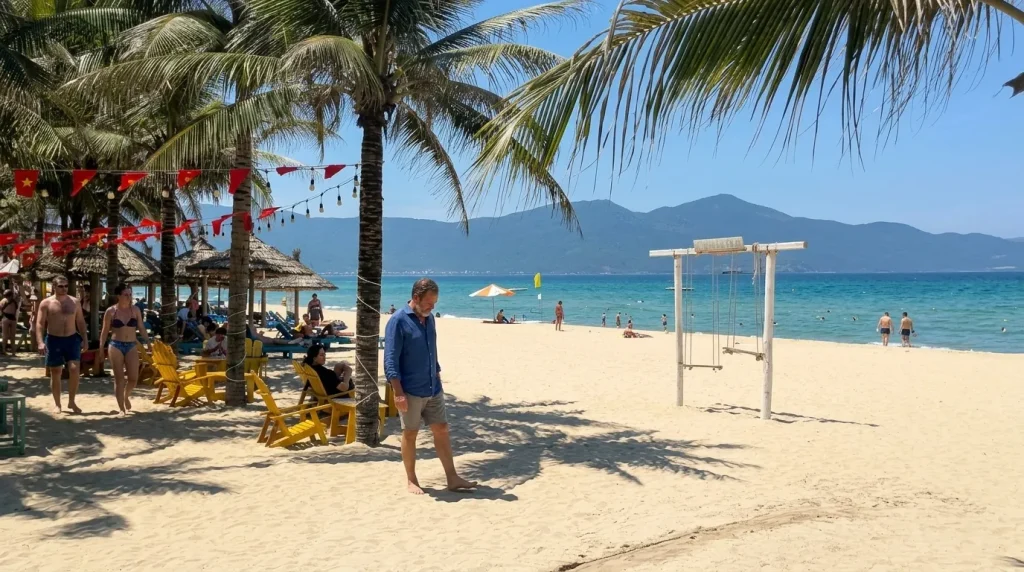
For central Vietnam and Da Nang, the premier window for visitation spans from March to August. The region’s rainy season usually initiates around September and concludes toward the end of December. Though honestly, I have personally noticed that clouds and gloomy gray skies frequently persist well into February and January anyway.
Without a doubt, the absolute worst month to plan a trip to central Vietnam and Da Nang is October. It represents the wettest 31 days on the entire calendar. November and October also serve as the terrifying climax of the central coast’s typhoon season. Tropical storms come roaring in off the East Sea and can easily dump a staggering 200-400mm of torrential rainfall in a single day. Nearby Hoi An is situated perilously on a flood plain. It frequently experiences intense swelling of the Thu Bon River, which causes the historic alleyways of the Ancient Town to literally transform into navigable canals. Like I said before, if you have schedule flexibility during this stormy period, shift your focus up north to Hanoi. Agreeable temperatures and delightful windows of sunshine routinely emerge up there while the center of the country is drowning.
Because they fall right after the rainy season concludes but just prior to the year’s peak heat, my absolute favorite months to be in Da Nang are May, April, or March. They offer slightly cooler temperatures alongside dependably dry weather. This pleasant window applies perfectly to Hue and Hoi An as well. Embarking on a central Vietnam itinerary during May, April, or March is highly recommended. It renders it the ultimate time to tackle the spectacular Hai Van Pass or spend a few hours wandering through Hue’s Imperial City.
Among those three, April and March stand slightly above May. Simply because May is when the aggressive heat really begins to build. To give you a visual on the vibe, I recorded the video below on Da Nang’s My Khe Beach during the month of May.
Throughout April and March, expect warm, nice temperatures ranging from the mid-to-upper 80s°F (28°C to 31°C). Once May hits, the mercury climbs to the high 80s°F and low 90s°F (31°C to 33°C). As May transitions into July and June, the atmosphere turns exceptionally, brutally hot.
Due to their minimal rainfall, July and June remain “great” months for visiting Hue, Hoi An, and Da Nang. You just have to remember these are the most blistering periods of the entire year. Expect scorching temperatures lingering in the mid-to-upper 90s°F (mid-to-upper 30s°C) throughout August, July, and June. It isn’t until September, which aligns with the onset of the rainy season, that the area finally experiences a notable decline in temperature.
Ho Chi Minh City (and the south)

Ranging from December all the way through April, you will find the absolute best time to visit southern Vietnam and Ho Chi Minh City. The local rainy season starts gearing up around May and finally taps out near November. February, January, and December firmly stand out as my preferred months to spend time sweating it out in Ho Chi Minh City.
If you have the luxury of trip flexibility, I highly recommend aiming for February or January. These two specific months boast the region’s lowest humidity levels – though, to be fair to December, it is also quite agreeable.
Throughout these three prime winter months (December, January, and February), you can anticipate balmy highs topping out around 90°F (32°C). This is paired with comfortable evening lows settling in the 70s°F (22°C). Plus, on the exceedingly rare occasion that you do encounter rain, it will almost certainly be just a fleeting, brief shower. Nothing day-ruining.
April or March represent the second-best window to uncover southern Vietnam and HCMC. You will still enjoy remarkably dry conditions, sure, but the climate undeniably begins to intensify. May, April, and March constitute the absolute hottest time of the year down south. Prepare yourself for soaring highs near 94°F (34°C) and sticky, suffocating lows that rarely dip below 76°F (24°C).
Like I said earlier, May typically heralds the arrival of the rainy season. If you are planning a trip within this general timeframe and possess some leeway, definitely opt for April or March to sidestep the heightened probability of precipitation that accompanies May.
This meteorological data remains highly consistent across other prominent southern locales. Places like the Mekong Delta, Can Tho, Vung Tau, and Phu Quoc basically experience the exact same thing. Should you venture down to Can Tho right in the middle of the dry season, you get treated to flawless, clear-sky mornings. Absolutely ideal conditions for navigating the Cai Rang Floating Market. Recognized as the Mekong Delta’s most massive wholesale floating market, it hits its chaotic, bustling peak between the hours of 5:00 AM and 7:00 AM. You’ll see local traders peddling fresh agricultural produce dangling from towering bamboo poles. Minor deviations in rainfall and temperature might exist depending on the specific town you end up in. But February and January serve as universally superb months to immerse yourself in southern Vietnam.
Other Popular Cities

When contrasting Nha Trang with Da Nang, the former enjoys considerably more stabilized weather patterns. Nha Trang certainly receives its share of rain and heat, don’t get me wrong. But both elements are noticeably less extreme than what you get hit with in Da Nang. Because of this, the optimal window to visit Nha Trang stretches all the way from January through August.
As depicted in the photograph above, I managed to hit a magnificent stretch of gorgeous weather during a spontaneous trip to Nha Trang in January. While exploring the area’s stunning beaches, I jumped on a ride on the cable cars soaring high above Nha Trang Bay. It’s the celebrated Vinpearl Cable Car, an impressive engineering feat that originally stretched an astounding 3,320 meters straight across the ocean to Hon Tre Island.
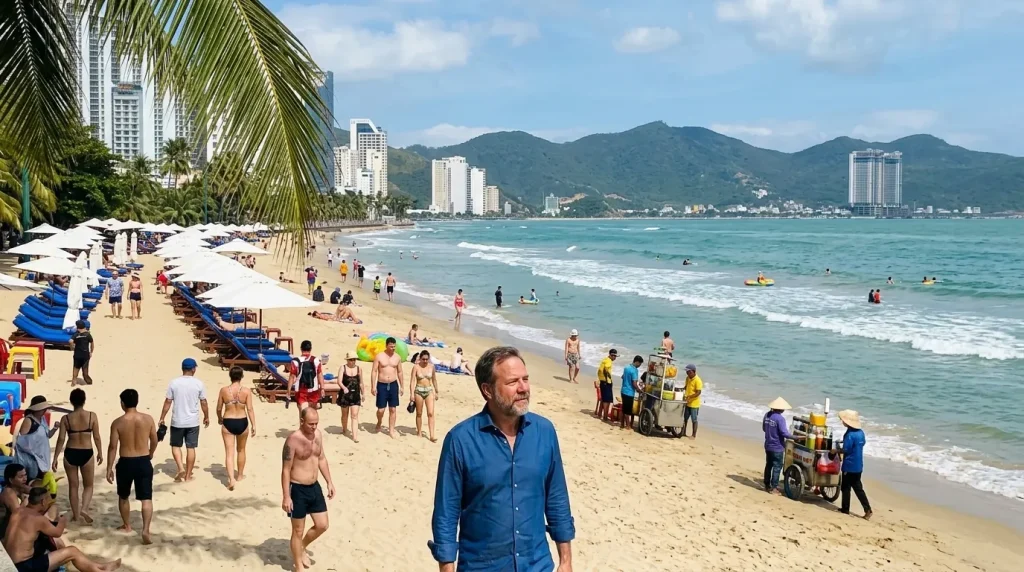
Nestled right at the base of La San Hill, merely a few kilometers to the northeast of the central city, lies Hon Chong Beach. This stretch of coastline is exceptionally famous for its colossal rock formations. Characterized by a gargantuan handprint deeply embedded directly into the stone, the most prominent cluster of boulders is known as Hon Chong (Husband Rock). It’s a site heavily steeped in the folklore of local fishermen.
In Nha Trang, the rainy season ordinarily wraps up in December. It can occasionally bleed over into the start of January though. If you are aiming for a January getaway to Nha Trang, keep a close watch on the forecasts. I personally struck gold and secured several days of pristine weather at the very beginning of January.
On a year-round basis, the temperature here spans from comfortable lows in the 70s°F (24°C) to daytime highs in the low 90s°F (33°C). The heaviest precipitation strikes from September to December (with November and October reigning as the wettest months). Yet this rainy season is typically much gentler than Da Nang’s stormy equivalent.
Another highly popular destination is the Vietnamese mountain city of Da Lat. Perched up on the Lang Biang Plateau at an impressive altitude of roughly 1,500 meters, Da Lat offers a climate that is persistently cooler throughout the entire year. Honestly, it can get downright cold! Because of this refreshingly mild and temperate weather, the city lovingly secured the moniker the “City of Eternal Spring”. It is immensely renowned for its vibrant coffee and flower agriculture, dense pine forests, and visually arresting French colonial architecture. The best example is probably the Da Lat Railway Station, a striking Art Deco masterpiece erected back in 1938. In Da Lat, the annual high temperatures consistently refuse to surpass the upper 70s°F (25°C). The lows reliably hover between the 50s°F (12°C) and the 60s°F (16°C).
Da Lat’s rainy season traditionally kicks off in April and pushes straight through until October. So the prime period to explore Da Lat is from December through March. Given those overlapping ideal weather windows, combining a visit here with a trip to Ho Chi Minh City during March, February, or January makes perfect logistical sense. Since Da Lat will be significantly chillier than HCMC, you will definitely need to pack wardrobes suited for both extreme microclimates – or just buy a cheap jacket locally when you freeze on your first night out.