
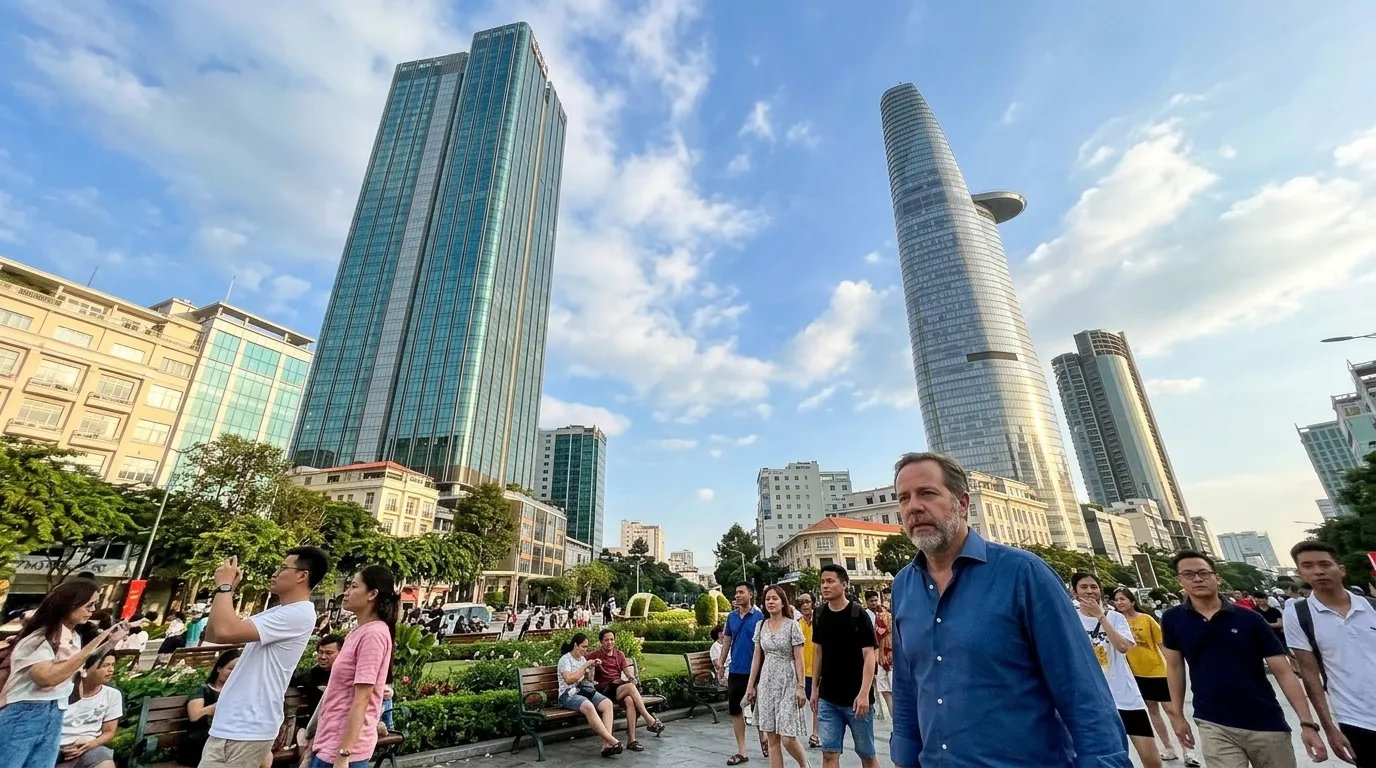
If you are trying to understand the weather patterns of Southern Vietnam, comparing it to the central coast is a really great place to start. Destinations like Hoi An and Da Nang get absolutely battered by coastal weather fronts. I’m talking non – stop, days – long downpours during their wet season that will keep you completely trapped indoors. Ho Chi Minh City offers a far less extreme climate. The rainy season in the metropolis formerly known as Saigon might stretch on longer than in the center of the country… but the precipitation mostly comes in the form of brief, intermittent showers. I have personally weathered multiple climate cycles in this chaotic, bustling city. It sits squarely in a tropical wet and dry zone governed primarily by the Southeast Asian monsoon. Make no mistake: it remains scorching hot throughout the entire calendar year. You will sweat. Certain stretches bring peak humidity (the rainy season, specifically) while other months turn up the heat significantly more than the rest of the year. April is a beast in that regard.
To help you strategize this whole trip, I’ve compiled weather data and my personal advice into the sections and charts below. To summarize all this: December through February are unequivocally the prime months to explore the city. If your schedule is entirely open, aim for February or January. You just must navigate carefully around the Tet holiday. On the flip side, the wettest and most humid stretch from May to October represents the least ideal time for a visit. Even so… it is far from a ruined vacation, since the showers are usually over quickly.
Ho Chi Minh City Weather: Seasons, Best & Worst Months
Note: The exact boundaries of the rainy and dry seasons shift slightly from year to year. You can cross – reference with this Ho Chi Minh City weather chart, as well as this alternative chart.
- Dry Season: December through April*
- Rainy Season: May through November*
- Hottest Months: May, April, and March
- Wettest Months: October down to June
- Lowest Humidity Months: March, February, and January
- Highest Humidity Months: October down to June
- Best Time to Visit: February, January, December
- Second Best Time to Visit: April and March
- Worst Time to Visit: May through November (along with the Tet holiday window)*
Best Time to Visit Ho Chi Minh City: December, January, February
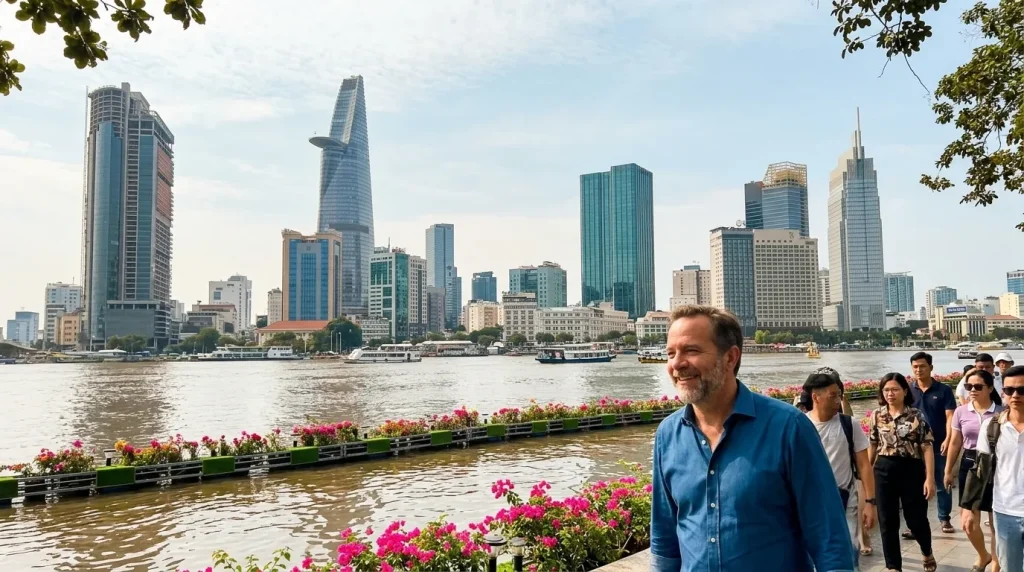
What to anticipate: Minimal humidity, a very low probability of precipitation, and hot temperatures.
- December: Average High 31°C (88°F) | Average Low 22°C (72°F) | Rainfall 50 mm
- January: Average High 32°C (89°F) | Average Low 22°C (72°F) | Rainfall 15 mm
- February: Average High 33°C (91°F) | Average Low 23°C (73°F) | Rainfall 5 mm
For the absolute optimal experience in Ho Chi Minh City, schedule your journey during February, January, or December. By the time November finally concludes, the rainy season has officially departed. This leaves the subsequent three months boasting the most comfortable climate of the year. You get the lowest rainfall totals paired with relatively cooler air – average temperatures will hover comfortably around 27° to 28°C (80° to 82°F). In the rare event that rain does fall, it will almost certainly be a fleeting shower. If your itinerary is highly adaptable, prioritize February and January. They feature the absolute lowest humidity levels. December is certainly no slouch in that department either, though.
There is one massive caveat for this timeframe. The Lunar New Year. Locally known as Tet. This monumental celebration shifts yearly but always lands in either February or January. Unless your explicit goal is to witness Vietnamese Tet traditions firsthand, it is incredibly wise to avoid booking your trip during this period. For days leading up to the holiday and during the event itself, the city undergoes a massive shift. An overwhelming number of commercial businesses simply shutter their doors. City – dwelling locals flee to their rural hometowns en masse to reunite with relatives. (You can explore future Tet dates here, and read dedicated Tet – specific travel information on this page).
Maybe you absolutely must travel during this window. Overlapping with the holiday for just a day or two is manageable and honestly offers a unique cultural glimpse. Those finding themselves in Saigon during the festivities should head straight to Nguyen Hue Flower Street. This sprawling pedestrian thoroughfare is completely reimagined into an immersive floral wonderland. Expect to see over 100,000 flower baskets, awe – inspiring 3D nighttime light projections, and colossal zodiac mascots. The spectacular displays planned for the Year of the Horse in 2026 are going to be wild. Still, I strongly advise against making the Tet holiday—including the three to five days preceding it—the core of your vacation. Beyond the designated celebration areas, you will find that a vast majority of beloved local cafes and charming mom – and – pop eateries will be closed tight.
Second Best Time to Visit Ho Chi Minh City: March, April
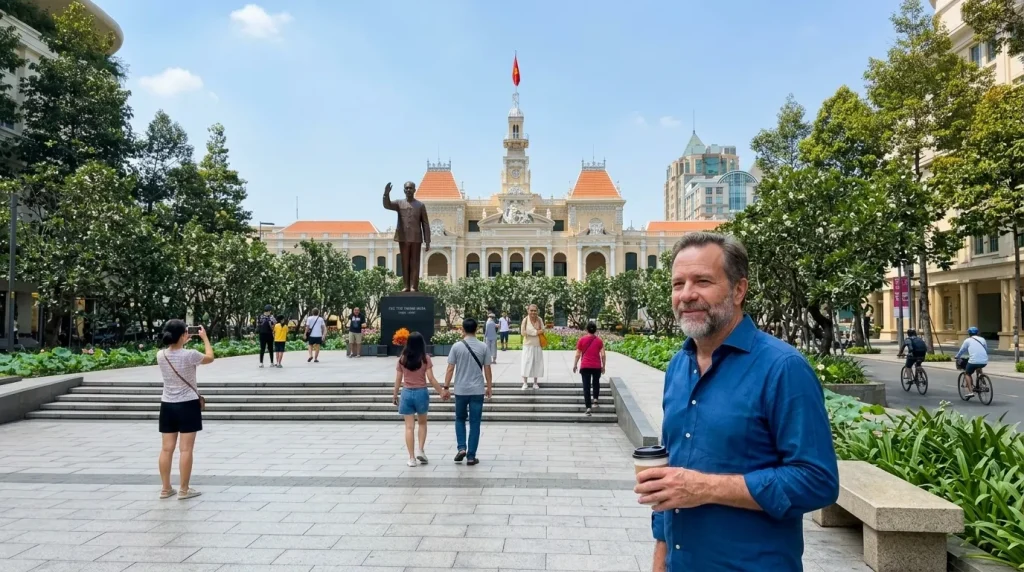
What to anticipate: Climbing humidity levels, infrequent rain, and the absolute hottest temperatures of the year.
- March: Average High 34°C (94°F) | Average Low 24°C (76°F) | Rainfall 10 mm
- April: Average High 35°C (95°F) | Average Low 26°C (78°F) | Rainfall 50 mm
When organizing your daily schedule during these blistering months, prioritizing shade and indoor activities is totally essential for beating the midday heat. This is a brilliant time to tour historical sites that offer air – conditioning or structural shade—places like the Independence Palace or the War Remnants Museum. Make sure to stay constantly hydrated. Go grab a refreshing, ice – cold cà phê sữa đá (traditional Vietnamese iced coffee) or buy a cup of freshly pressed nước mía (sugarcane juice) from a local street – side cart. When selecting your base camp, keep in mind that District 3 provides substantially more natural tree shade than the heavily concreted District 1. You can dive deeper into this by reading my specific guides on getting around HCMC and where to stay.
I categorize April and March as the second – best window to visit. On the plus side, the climate remains quite dry. The thermometer readings begin to spike aggressively, though. May, April, and March secure the title of the hottest months of the calendar year. Concurrently, the humidity initiates its upward climb. March is relatively tolerable in terms of mugginess – even if the heat is noticeably more oppressive than in February – but by the time April rolls around, moisture levels slowly escalate toward their annual peak. In the end, if you don’t mind sweating through intense heat, this remains a highly favorable time for a trip. Your sightseeing won’t be interrupted by monsoons. Plus, staying within District 3 or District 1 guarantees you are always near a plethora of buildings offering chilled drinks and momentary relief from the sun.
Worst Time to Visit Ho Chi Minh City: May to November
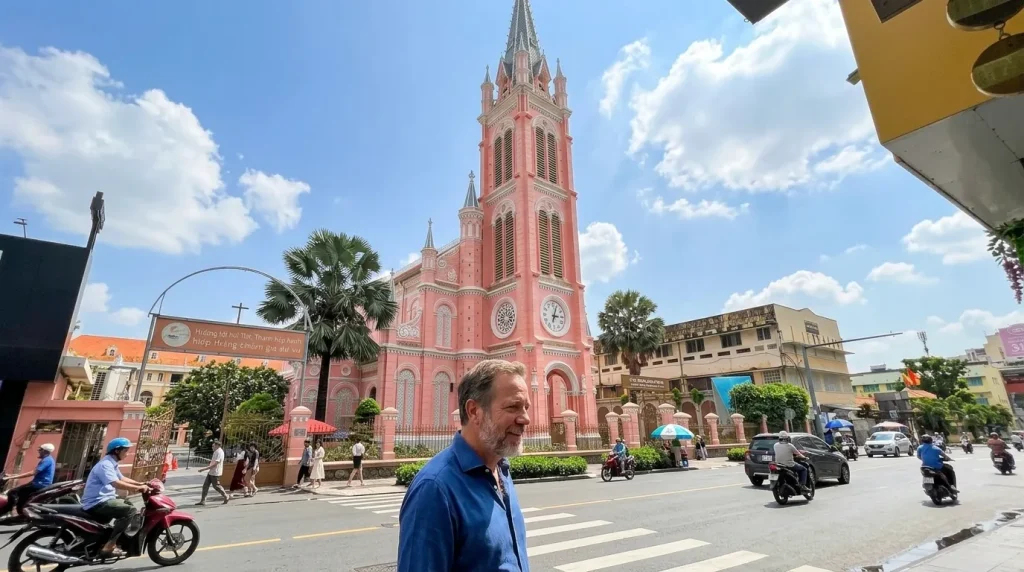
What to anticipate: The highest yearly humidity, blazing hot weather, and sporadic daily rainfall.
- May: Average High 34°C (94°F) | Average Low 26°C (78°F) | Rainfall 220 mm
- June: Average High 33°C (92°F) | Average Low 24°C (76°F) | Rainfall 310 mm
- July: Average High 33°C (91°F) | Average Low 24°C (76°F) | Rainfall 295 mm
- August: Average High 33°C (91°F) | Average Low 24°C (76°F) | Rainfall 270 mm
- September: Average High 32°C (90°F) | Average Low 24°C (75°F) | Rainfall 325 mm
- October: Average High 32°C (90°F) | Average Low 24°C (75°F) | Rainfall 265 mm
- November: Average High 32°C (90°F) | Average Low 23°C (74°F) | Rainfall 115 mm
Let me clarify what I mean by the “worst” time to visit. In Ho Chi Minh City, this designation does not equate to a ruined trip. A genuinely terrible travel experience involves being trapped indoors for days due to unrelenting, all – day storms. Thankfully, that phenomenon rarely occurs here. According to data from the Weather & Climate website, Ho Chi Minh City actually records lower total annual rainfall than Da Nang. Which is crazy, considering HCMC endures a much longer wet season. While Hue, Hoi An, and Da Nang can suffer from perpetual, non – stop deluges (especially in October, and frequently in November and September), HCMC’s rain usually manifests as an hour or two of intense precipitation before completely clearing up. If you are traveling in the Fall, consider routing your itinerary up north to visit Hanoi instead.
Between May and November in Saigon, you will encounter the city’s highest humidity alongside formidable heat. September generally takes the crown as the absolute worst month for mugginess. The semi – daily showers usually arrive in the late afternoon as dramatic, heavy tropical downpours. Should you get caught in one, the easiest solution is to step into the nearest convenience store and purchase a cheap plastic poncho.
A critical piece of advice for traversing the city during these wet months – be highly vigilant about booking hotels or rentals in low – lying expatriate enclaves like Thao Dien (situated in District 2 / Thu Duc City). These specific zones are infamous for severe infrastructural street flooding. When surging high tides from the adjacent Saigon River clash with torrential downpours… the streets frequently submerge under knee – deep water. It results in countless stalled Grab vehicles and completely impassable roads. It’s a huge mess.
Look, if you have total freedom over your travel calendar, I suggest avoiding October, September, August, July, and June altogether. A visit is absolutely doable during this timeframe. You just must be mentally prepared for sporadic daily downpours, relentless humidity, and sweltering heat.